






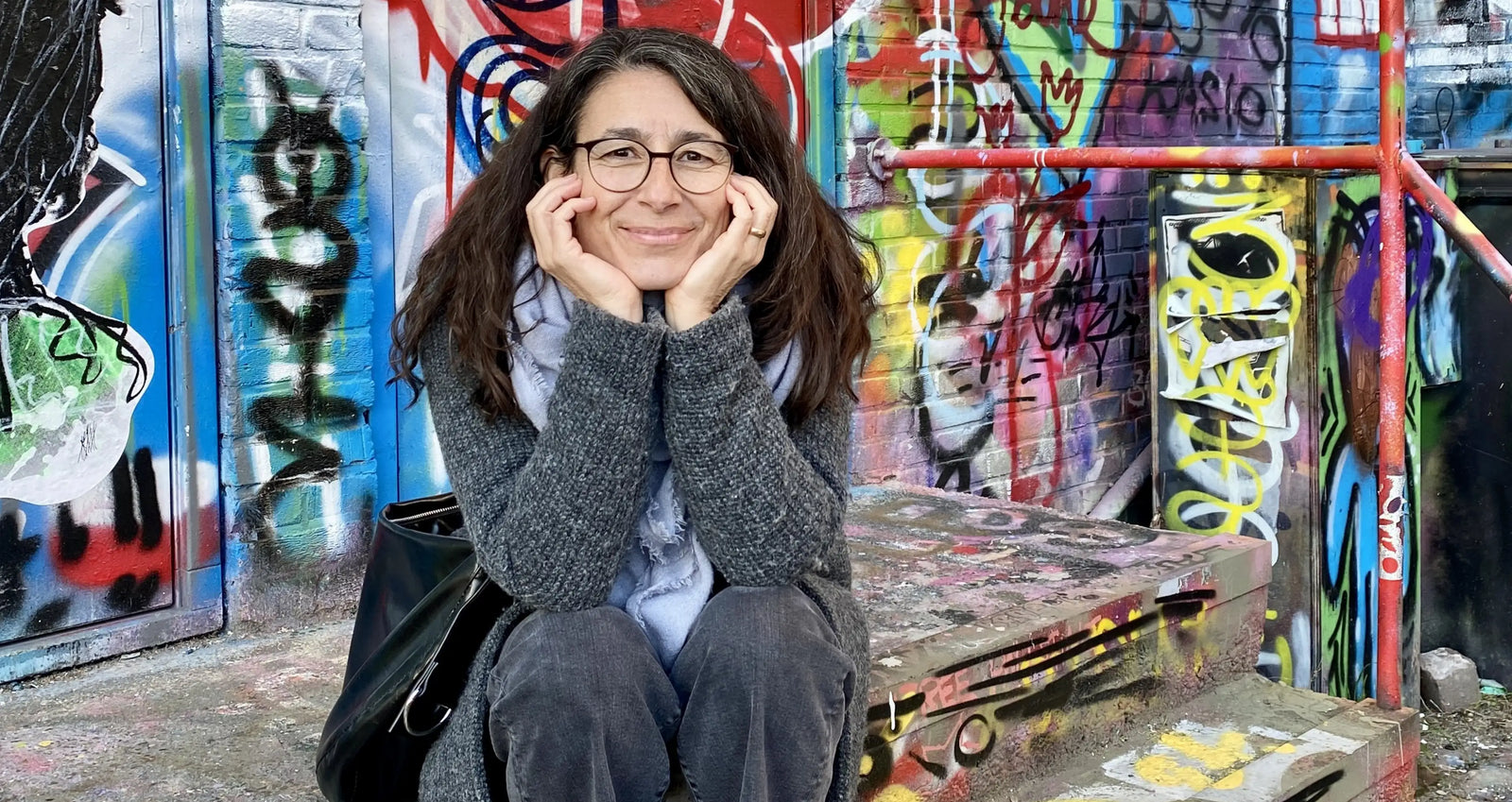

Menopause: My Biggest "Aha" Moments
What I Wish I’d Known Sooner—Personal Experiences, Surprising Insights, and Honest Thoughts on an Often Underestimated Stage of Life.
Looking back now, I can’t say exactly when menopause began for me. The first symptoms crept quietly into my life—so subtly that I didn’t recognize them as such at first. I must have been in my mid-forties when I noticed the first strange changes: I was gaining weight slowly but steadily; my figure was changing—suddenly I had more belly and less butt. My hair was getting thinner and falling out more. My skin also began to change; it felt drier and sagged on my cheeks and chin.
More Than Just Signs of Aging
I dismissed these early signs of Menopause as isolated, minor “inconveniences” that come with getting older—I didn’t recognize them as part of a bigger picture. It wasn’t until much later that I realized they were already the first chapters of a new phase of life.
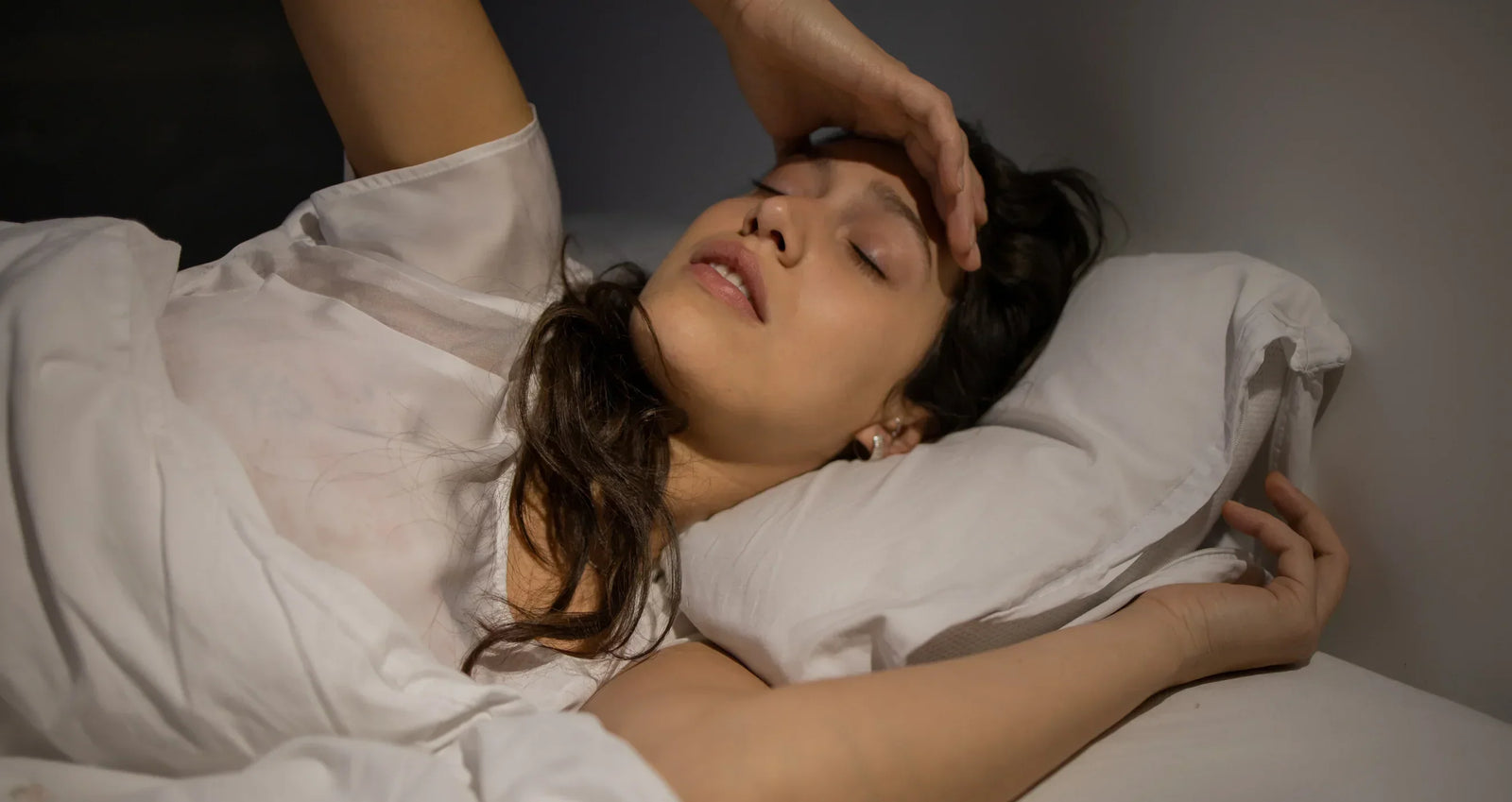
These initial changes were soon followed by further surprises: My energy levels kept dwindling, my memory increasingly played tricks on me, mood swings set in, and heart palpitations and anxiety became my nightly companions. And then the first hot flashes appeared—a life-changing experience. I especially remember one evening at an event: Out of nowhere, I started sweating. That alone was strange, but what really alarmed me was the sudden, overwhelming heat rising inside me, along with this new, pungent body odor.
“It dawned on me: Something life-changing is happening here that I hadn’t expected at all. So is this what menopause is like?”
An Underestimated Stage of Life
Of course, I knew menopause was coming. But I hadn’t really given it much thought. Everyone said it was a completely natural phase that you could easily get through just by having a positive attitude. So I didn’t want to drive myself crazy in advance or worry about things that might not even be relevant until the distant future.
I wasn’t afraid, nor did I have any concrete idea of what to expect. The topic was practically nonexistent in my social circle—no one talked about it. That’s why I was even more convinced that while menopause would come eventually, it certainly wouldn’t come so soon—and definitely not be so intense.
As is so often the case in life, things turned out differently—and much more surprisingly than I could ever have imagined. Today I know this: If I’d had any idea back then what was really in store for me, I would have treated this phase of life with much more respect.
“I wish someone had slipped me a little note that said: ‘Warning: Menopause starts earlier than you think—and it’s much more than just hot flashes.’”
My “Aha!” Moments
1. Menopause begins much earlier than you think—and the Menopause is just one milestone
For a long time, I thought menopause and Menopause were the same thing. It wasn’t until later that I realized that Menopause is just one milestone on a longer journey: it marks the point at which menstruation finally stops—that is, after twelve months without a period. I hadn’t expected the “big change” until then. In reality, however, menopause begins much earlier. The first hormonal changes often creep into your life as early as your mid-40s and make themselves felt in a variety of ways. And even after Menopause, the body still needs time to readjust.
“What really surprised me was that the changes not only appeared earlier, but were also much more varied than I expected.”
2. There Are Far More Symptoms Than Just Hot Flashes
When it came to menopause, the only thing that came to mind were the well-known hot flashes. These are considered synonymous with this phase of life and are generally mentioned most often. But the list of possible symptoms is much longer than I thought. It includes numerous other, often surprising changes such as sleep disturbances, weight gain, hair loss, dry skin, heart palpitations, anxiety, joint pain, loss of libido, changes in body odor, bone density loss, and even difficulty concentrating or forgetfulness—often referred to as “brain fog.” Every woman experiences her own unique combination.
“I had underestimated not only the variety but also the duration of menopause.”
3. Menopause Is Not a Sprint, but a Marathon
At first, I thought menopause might be a somewhat longer—but above all, intense—phase—a time you somehow get through, and then it’s over. But over time, I’ve realized: This journey takes much longer than I would have expected, and it’s anything but a straight line. It feels more like a long marathon, with stretches where everything is going quite well, and then periods when the symptoms hit with full force. Time and again, I felt like I’d finally left the worst phases behind me—only to find out that it wasn’t over yet. I’ve often asked myself, “When will this finally be over?”—but there’s no clear finish line. Menopause is a long journey that requires a lot of patience and self-care.
“I realized: Menopause isn’t just a physical challenge.”
4. Menopause Doesn’t Stop at the Body
Suddenly, it wasn’t just my health that took center stage; my self-image, my relationships, and even my role at work were put to the test. I sensed that it wasn’t just my body that needed time to find its new balance, but my soul as well. Mood swings, doubts about my own worth, and the feeling of being less visible kept weighing on my mind. It was an emotional roller coaster that challenged me to embrace a new phase of life.
“Precisely because so many areas of life are affected, every woman experiences this time differently.”
5. Every woman experiences menopause differently
What I’ve learned about menopause in recent years: There isn’t “one” single menopause experience. For me, for example, it wasn’t the classic hot flashes that were the main issue, but rather sleep problems, mood swings, and that vague feeling of dissatisfaction. Other women in my circle, on the other hand, struggle with different symptoms: one suffers from anxiety, another from weight gain, and yet another feels almost nothing at all. There’s no one-size-fits-all pattern.
That’s exactly what sometimes makes it hard to talk about—especially when friends haven’t gone through it yet or are having completely different experiences. Still, I’ve noticed how much it helps to talk openly: Hearing that other women are also struggling with unexpected changes takes a lot of the pressure off and shows me that I’m not alone. Often, that’s exactly what has comforted me and given me the courage to find my own way through this time.
“The diversity of experiences has shown me how important it is to share stories and, above all, to offer support.”
6. Help is available—and you don’t have to do everything on your own
For a long time, I thought I just had to “hang in there” and “grit my teeth”—just as many women before me had done. But today I know: even though menopause is still often a taboo topic, there are many ways to get support—by talking to friends, seeing a gynecologist, reaching out to counseling centers, reading books, or listening to podcasts. No one has to go through this alone. Seeking help isn’t a sign of weakness—it’s a sign of strength and self-care. Open communication and being receptive to help promote well-being, provide relief, offer encouragement, and show that you’re not alone.
“It was especially through talking with others that I realized: Menopause isn’t just about saying goodbye and loss.”
7. Menopause Can Also Be Liberating
Of course, there are some things I’ve had to say goodbye to during menopause: the freshness of youth, the ability to have children, a bit of my carefree spirit, and my visibility. It would be a lie to sugarcoat that. But I’ve also realized that with the end of fertility and the hormonal ups and downs, a new freedom begins for me—no more menstruation, no more constantly planning around my cycle, no more pressure to meet expectations. For me, menopause marks the start of a new phase of life in which I can discover new things and develop more self-determination, more serenity, and perhaps even more courage to shape my life in a way that suits me.
“Nevertheless, menopause is still a taboo subject that carries negative connotations.”
8. Menopause: Between Visibility and Taboo
Menopause is certainly more visible today than it was a few years ago—there are now books, podcasts, articles, and even advertisements that openly address it. Nevertheless, I feel that the topic often remains somewhat in the shadows. As soon as personal experiences, concerns, or insecurities come up, things quickly fall silent again.
I’m constantly surprised by how deeply this silence is still rooted within us, even though we’ve long since entered the 21st century. On the one hand, I find it encouraging that the topic is slowly finding its place in the public sphere. On the other hand, I sense for myself—even among friends or in my professional life—just how much uncertainty and shame still linger. How much easier would it be if we could simply be more open and honest with one another?
How I See Things Differently Today—and Why Menopause Is a New Beginning
When I look back now, I realize how much anxiety, self-doubt, and sleepless nights I could have spared myself if I’d known sooner what was really in store for me. I could have put many of the things that worried me into perspective and accepted them as a normal part of this phase of life.
I would have sought out conversations sooner—with friends, with my doctor, with my partner, and even with my children. I would have allowed myself to accept help instead of trying to handle everything on my own. Knowledge and sharing experiences would have shown me that I’m not alone—and that it’s completely normal to sometimes feel sick, overwhelmed, or even crazy.
Above all, I would have listened more closely to my body, demanded less perfection from myself, and allowed myself more often not to have to have everything under control. Menopause isn’t a time for perfection, but for self-care, compassion, and a little more humor—like when I smell a bit strong again or lose my train of thought in the middle of a sentence.
With more serenity, self-acceptance, and a willingness to adjust to the changes early on, I could have taken many things in stride. And above all: I would have felt less alone and “wrong,” but rather as part of a community of women who are all going through this time in their own way.
Today I know: Menopause isn’t an end, but the start of a new phase of life. My body may no longer be as youthful and energetic as it used to be, but I now see it as a faithful companion that constantly adapts to new circumstances. For me, menopause is a new beginning—and a chance to get to know myself all over again.

About the Author
Rita Angelone
Rita Angelone is a mother of two, blogger, and columnist from Zurich. On her blog, dieangelones.ch, she has been writing authentically, humorously, and realistically for nearly 20 years about her everyday family life, social issues, and personal experiences—from raising children to menopause. With her open, honest style, she encourages women to rediscover themselves and life time and time again. When she’s not writing, she enjoys spending time with her family, loves to cook, and explores new corners of her hometown or around the world. Follow Rita Angelone on Instagram and Facebook for even more insights into her daily life and thoughts.
Our Tip
Support During Menopause
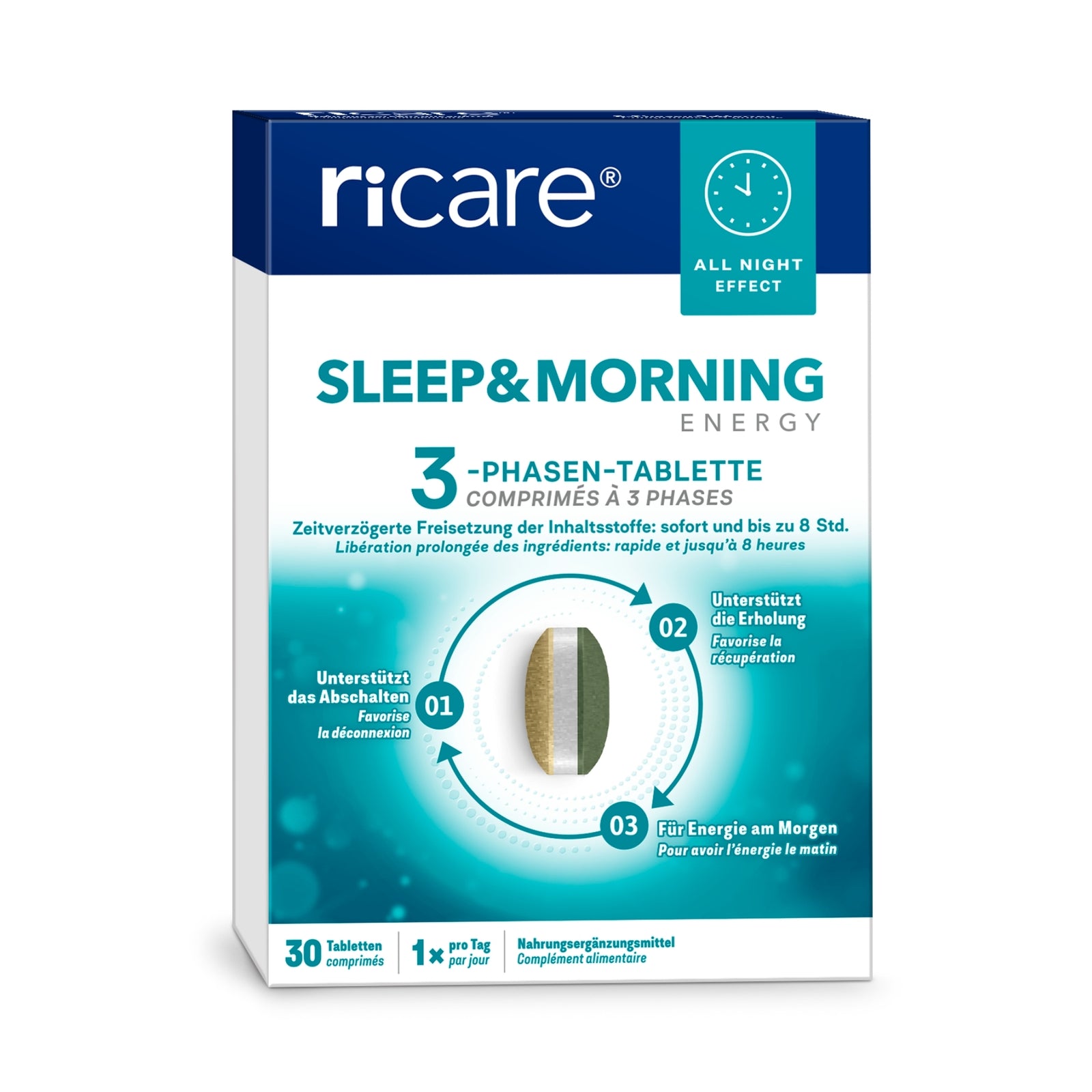
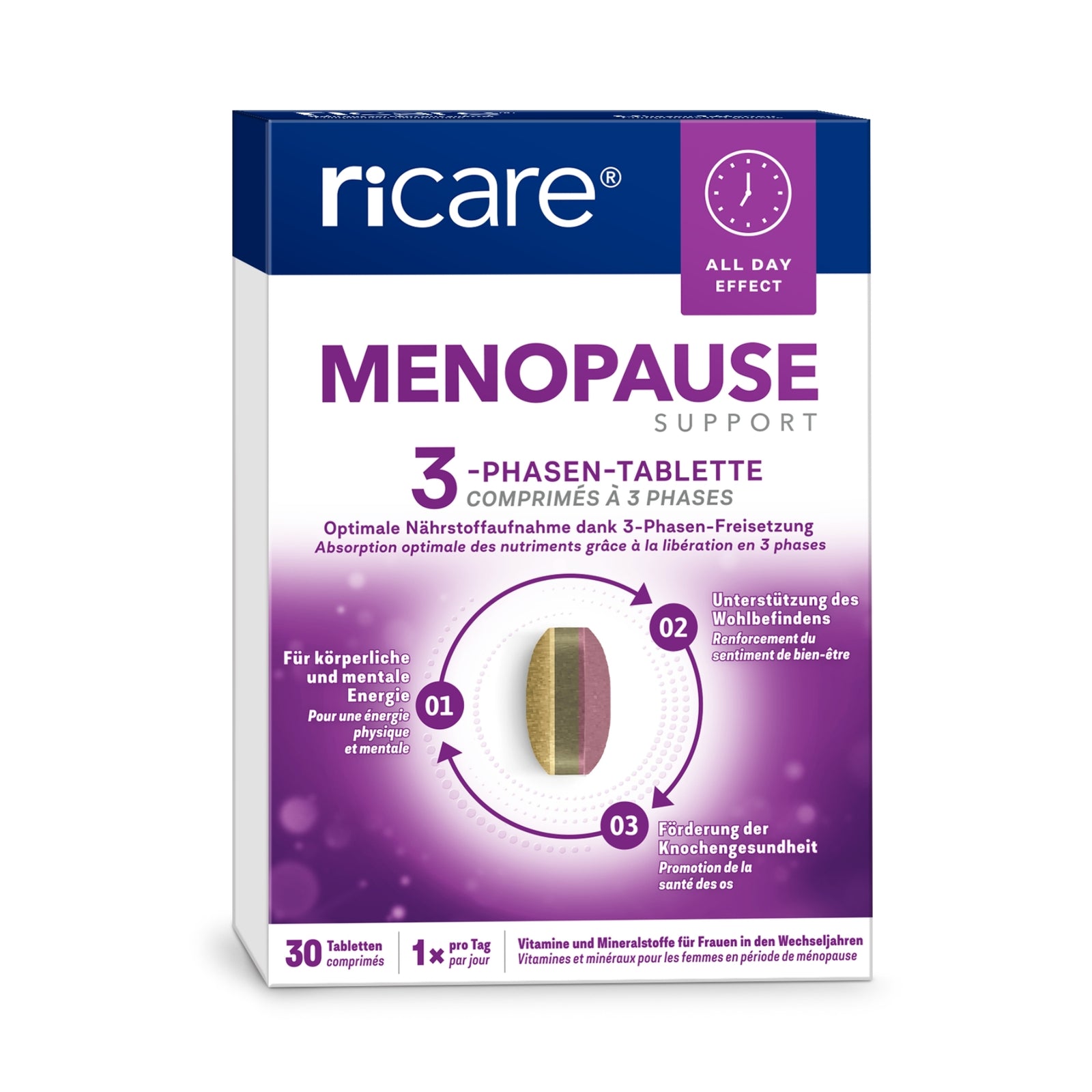
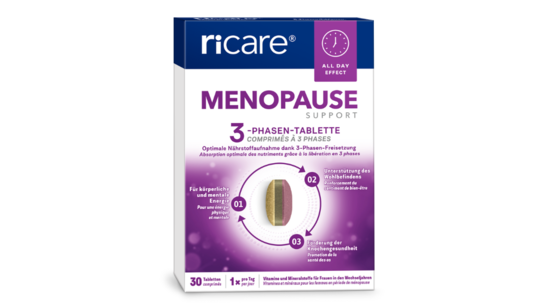
ricare® Menopause Support offers women going through menopause targeted support with an innovative multivitamin and mineral complex. It helps meet daily nutritional needs, supports mental clarity and bone health, and contributes to normal psychological function.
Learn more →