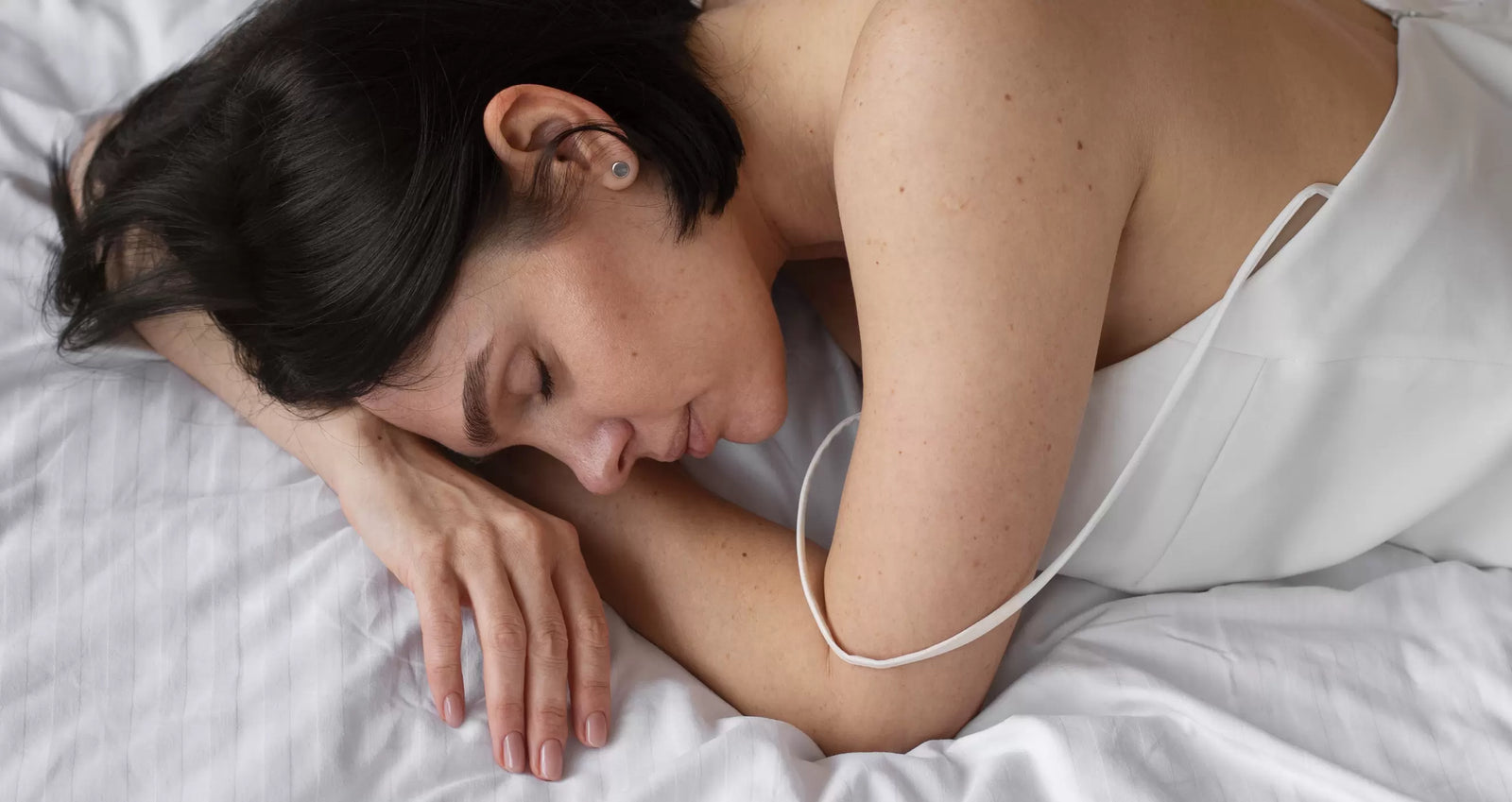












Are you tired in the evening, fall asleep quickly—and then suddenly find yourself awake at 2 or 3 a.m.? You’re not alone. Many people have no trouble falling asleep but struggle to stay asleep.
There can be various reasons for waking up at night. Often, several factors play a role at the same time.
What does “sleep maintenance disorder” mean?
We talk about sleep maintenance disorder when you wake up repeatedly during the night and have trouble falling back asleep. Occasional periods of wakefulness are completely normal—our sleep follows cycles.
It becomes a problem when:
- you wake up frequently
- you lie awake for longer periods
- you don’t feel rested in the morning
- you experience fatigue or irritability during the day
Why do we wake up at night?
Waking up at night is usually no coincidence. The body reacts to internal or external stimuli.
1. Stress and racing thoughts
A common trigger is stress. Even if you fall asleep easily in the evening, your nervous system can become activated during the night. The stress hormone cortisol naturally rises in the early morning hours. If you’re under stress, this surge can cause you to wake up—and your mind immediately starts racing.
2. Physical Factors
Physical processes can also interrupt sleep:
- slight temperature fluctuations
- night sweats
- digestive activity
- blood sugar fluctuations
The body is more sensitive to changes at night than during the day.
3. Sleep Environment
Light sources, noise, or a room temperature that’s too warm can also cause you to wake up from a lighter stage of sleep.
4. Life Stage and Hormonal Changes
Hormonal changes—such as those that occur during certain life stages, like menopause—can affect your sleep patterns. Here, too, the nervous system reacts more sensitively to internal stimuli.
Why It’s Often Hard to Fall Back Asleep
For many people, the real problem isn’t waking up itself, but lying awake afterward. As soon as thoughts start to surface or inner restlessness sets in, the nervous system becomes further activated.
The greater the pressure (“I have to sleep now!”), the harder it is to let go.

Conclusion
Sleep occurs in cycles—and periods of wakefulness are a natural part of the biological process. If falling asleep is not a problem but staying asleep is, the cause often lies in increased nighttime activation of the nervous system.
The better you understand the possible triggers, the more effectively you can address them—and stabilize your sleep again.