








Why Preventing Osteoporosis Is Important
Menopause marks a significant turning point in a woman’s life and brings with it numerous physiological changes. One of the most serious is the accelerated loss of bone mass, which significantly increases the risk of osteoporosis.
Osteoporosis is a condition in which bone mass decreases and the microarchitecture of bone tissue is damaged. This makes bones more susceptible to fractures, particularly in the:
- the hip
- Spine
- Wrist
To minimize the risk of bone fractures, preventive measures during menopause are particularly important. These include:
- A balanced diet rich in calcium and vitamin D
- Regular exercise, especially strength training
- Targeted support through dietary supplements
The Connection Between Menopause and Osteoporosis
During menopause, estrogen levels in the body drop dramatically. This hormone is crucial for healthy bone metabolism because it:
- inhibits the loss of bone mass
- supports the formation of new bone tissue
An estrogen deficiency can lead to a faster decline in bone density. This increases the risk of fractures, particularly in:
- the spine
- the hip
- the wrists
Why is bone health so important during menopause?
The rapid loss of bone density makes preventive measures essential. A balanced diet, exercise, and targeted support can help minimize the risk of osteoporosis and fractures.
Why Prevention Is So Important
Ideally, building up as much bone mass as possible should begin before menopause. However, even after menopause begins, it’s never too late to take action.
Preventive Measures for Strong Bones
By taking the right steps, you can positively influence the progression of osteoporosis and reduce the risk of bone fractures. Focus on a combination of:
- A healthy lifestyle: A balanced diet with enough calcium and vitamin D.
- Targeted exercise: Regular exercise, such as strength and weight training, strengthens bones.
- Medical support: In consultation with healthcare professionals, therapies or dietary supplements may be beneficial.
It’s never too late to promote your bone health and navigate menopause with strength!
Strategies for Strong Bones
A balanced, calcium-rich diet is essential for strong bones. Good sources of calcium include:
- Dairy products
- Green leafy vegetables
- Fortified foods
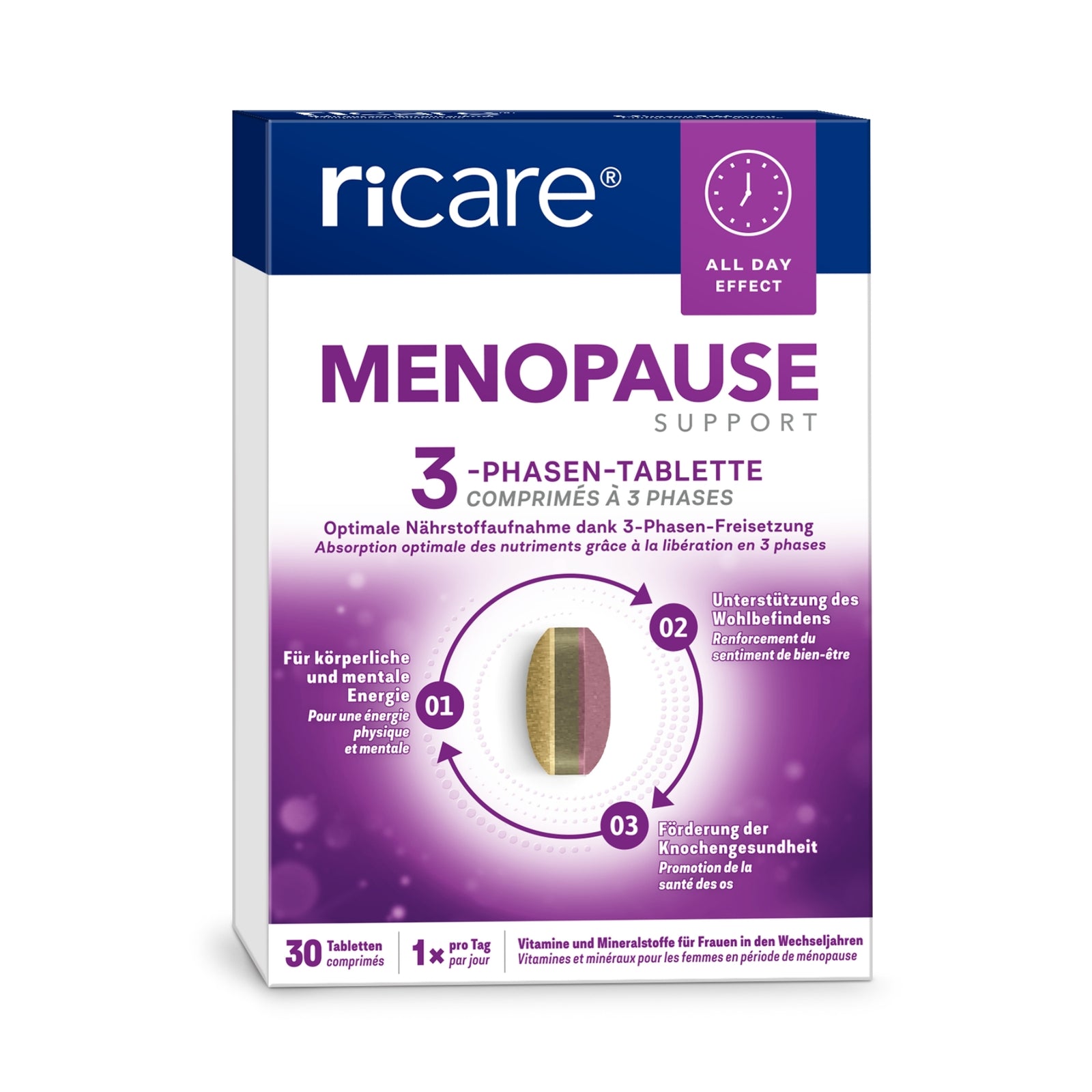
Vitamin D also plays a key role, as it supports the body’s absorption of calcium. It can be obtained from sunlight or, if needed, through dietary supplements. Products like ricare® Menopause Support provide calcium and vitamin D and can support your well-being during menopause.
Regular exercise is also crucial for slowing the loss of bone density or even increasing bone mass. The following are particularly effective:
- Strength training
- Walking, dancing, or climbing stairs
Studies show that targeted muscle training promotes long-term bone health. Choose activities that you enjoy and can easily incorporate into your daily routine.
Healthy lifestyle:
Quitting smoking and reducing alcohol consumption have a positive effect on bone health. These measures can also help protect your bones in the long term.
Medical Advice: Finding Personalized Solutions
If you’re at increased risk for osteoporosis, it’s advisable to consult with a specialist. In certain cases, hormone replacement therapy (HRT) may be beneficial to compensate for estrogen deficiency. However, the decision to undergo HRT should always be made on an individual basis and carefully weighed.
The Menopause is a critical phase for your bone health. By adopting a healthy lifestyle, exercising regularly, and eating a balanced diet, you can actively help minimize your risk of osteoporosis. If you’re unsure, consult a healthcare professional to develop personalized strategies. Prevention and early intervention are key to ensuring your long-term quality of life.