Menstruation
A Natural Part of Life
Menstruation is a fascinating and natural process that demonstrates just how impressively the female body functions. Despite its central importance to women’s health, menstruation is still surrounded by many misconceptions and taboos. This article explains what happens in the body during menstruation, what symptoms may occur, and how to relieve them in simple and effective ways.
What Is a Period, and What Exactly Happens in the Body?
Menstruation, also known as a period, is the visible part of a complex process that occurs approximately every 25 to 31 days. During this process, the uterine lining—which has built up over the course of the cycle—is shed if pregnancy has not occurred. This process is controlled by hormones and is divided into several phases:
- The follicular phase: In the first few days of the cycle, the lining is shed through menstruation, and the body is already preparing for the next ovulation.
- Ovulation: Around the middle of the cycle, an egg is released from the ovary—this is the most fertile phase.
- The luteal phase: During this phase, the endometrium continues to thicken. If the egg remains unfertilized, the cycle begins again.
Menstruation is therefore a sign that the body is healthy and ready to bring new life into the world—an entirely natural process that deserves no taboos.
What symptoms might be experienced?
Periods vary from person to person. Some experience them with almost no discomfort, while others struggle with various symptoms. Common symptoms include:
- Menstrual cramps: Pain in the lower abdomen caused by uterine contractions.
- Headaches and migraines: Often triggered by hormonal fluctuations.
- Back pain: This can radiate down into the legs.
- Breast tenderness: A common sign of hormonal changes during the menstrual cycle.
- Mood swings: Hormones affect not only the body but also the mind.
- Fatigue and digestive problems: These are also common symptoms associated with menstruation.
What can you do if you experience these symptoms?
The good news: There are many ways to relieve symptoms. In addition to classics like hot water bottles or tea, there are modern and practical alternatives. Here’s an overview:
- Heat: A hot water bottle or heating pad can provide relief from cramps in the lower abdomen, as it promotes blood circulation and relaxes the muscles.
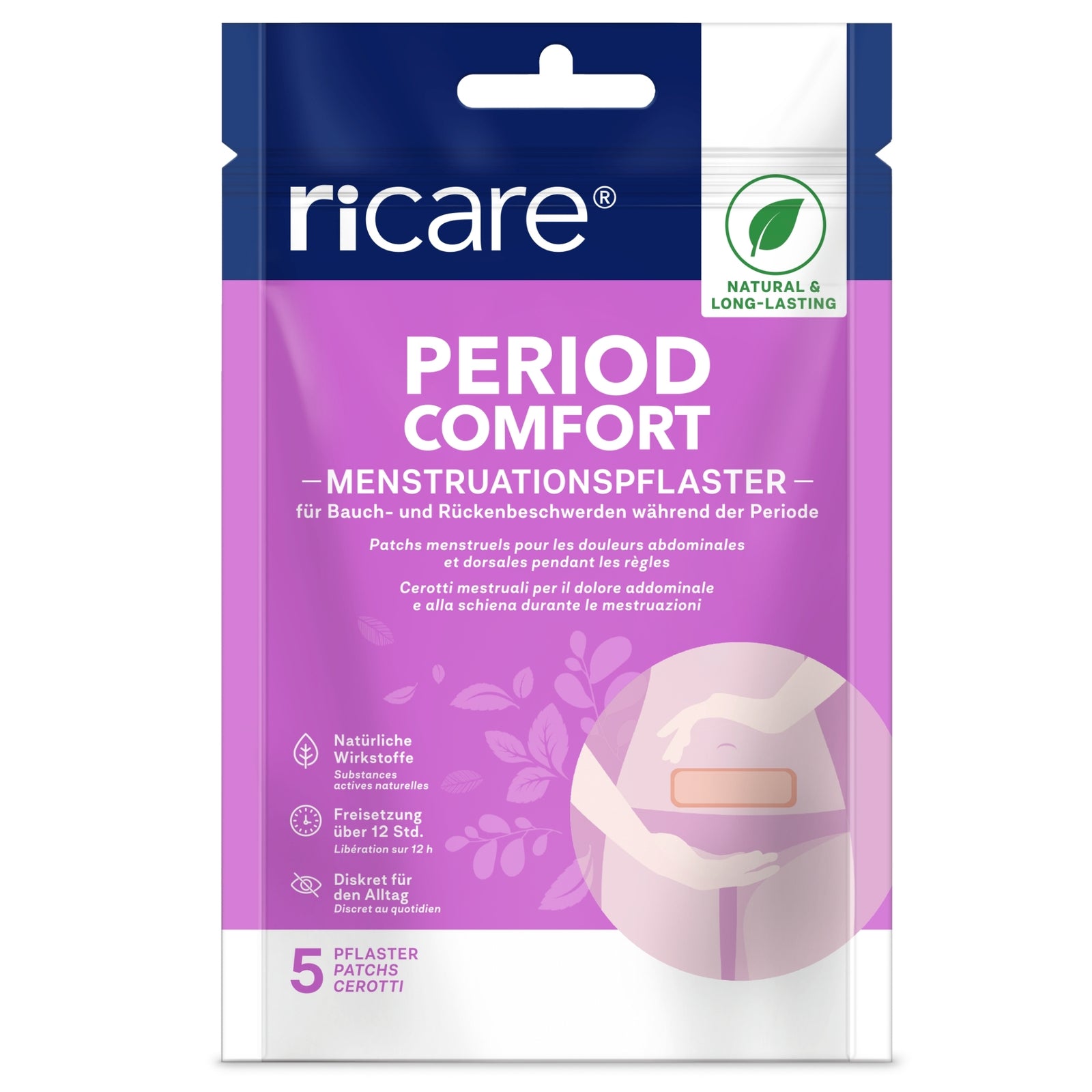
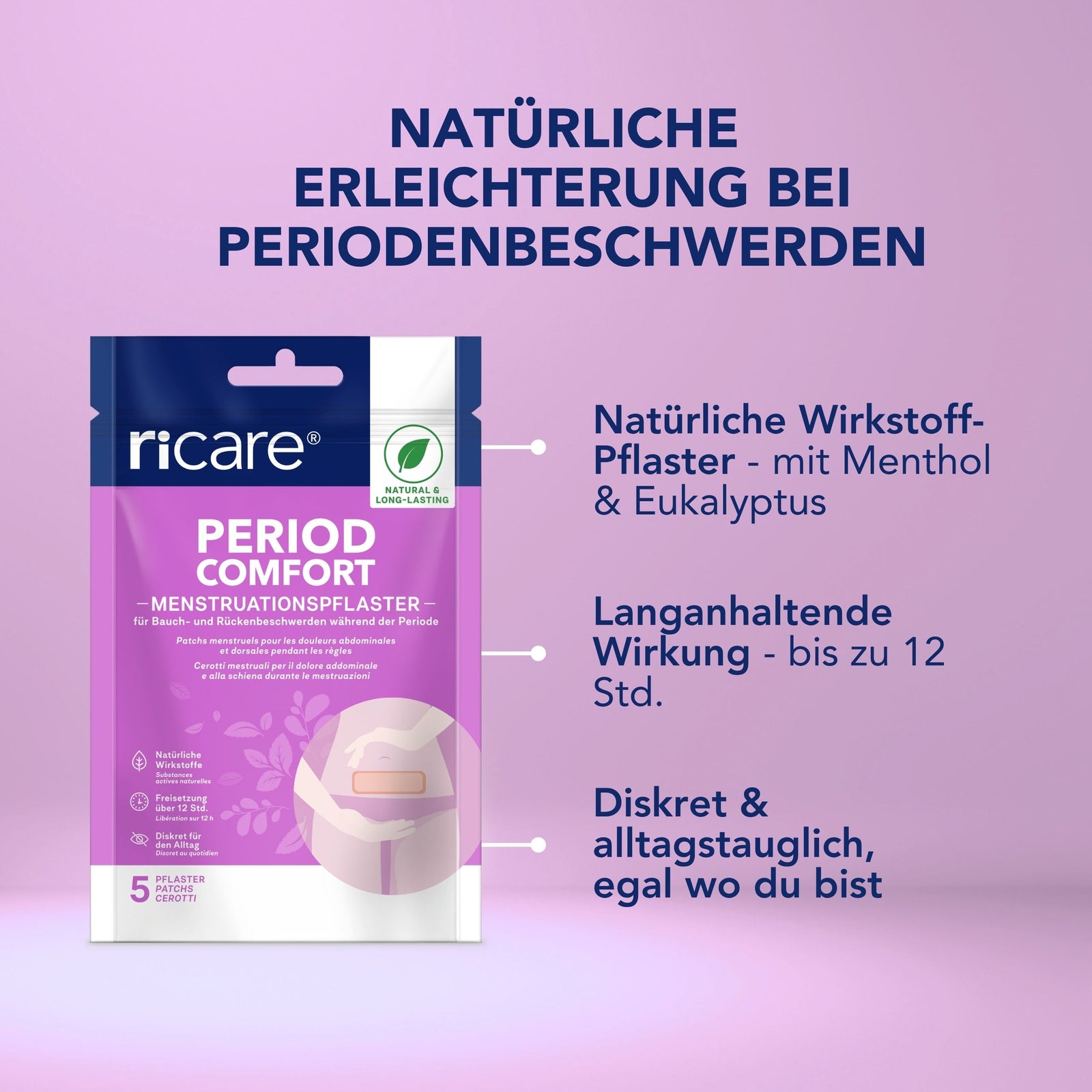
- Innovative transdermal patches: ricare® period patches are a practical solution. Unlike heat, they provide a cooling or slightly tingling sensation, which soothes the affected areas and provides targeted relief from cramps. The patches are discreet, portable, and free of chemical active ingredients—perfect for when you’re on the go or in everyday life.
- Light exercise: Yoga, walking, or stretching can improve blood circulation and reduce pain.
- Diet: A balanced diet rich in magnesium, iron, and vitamin B6 can be helpful.
- Relaxation techniques: Meditation, breathing exercises, or a warm bath have a calming effect on the body and mind.
When should you seek medical advice?
Sometimes symptoms are a sign of underlying problems that should be evaluated by a doctor. These include:
- Very heavy bleeding or unusually long cycles.
- Extreme pain that significantly interferes with daily life.
- Suspected conditions such as endometriosis, PCOS, or fibroids.
Regular checkups with a gynecologist help you better understand your cycle and detect potential abnormalities early on.
Discover now
Natural Patches for Period Discomfort
Discover ricare® period patches, which provide natural and long-lasting relief from abdominal and back pain during your period.
Learn more 

 CHF 15.95
 CHF 9.95
 CHF 16.95
 CHF 9.95
 CHF 9.95