
 CHF 15.95
 CHF 9.95
 CHF 16.95
 CHF 9.95
 CHF 9.95

Understanding Menopause: Causes, Symptoms, and Stages of Hormonal Change
Menopause is a natural biological process that every woman experiences sooner or later in life. This phase of life not only brings physical changes but also offers the opportunity to get to know yourself better and actively shape the transition into a new stage of life. Here you’ll learn everything about the causes, symptoms, and phases of menopause to develop a comprehensive understanding of this stage of life.
In common parlance, Menopause is often used to refer to the entire period leading up to the last menstrual period. From a medical perspective, however, Menopause refers to a single point in time: it marks the very last menstrual period and, with it, the permanent cessation of menstruation. This point in time symbolizes the end of fertility. Medical professionals refer to Menopause when no menstruation has occurred for a period of 12 months. The average age worldwide ranges from 45 to 55 years, although individual variations are possible. The cause of Menopause is a natural decline in the production of the hormones estrogen and progesterone in the ovaries. These hormonal changes affect many bodily functions and can cause various symptoms.
Menopause is a natural process that is usually triggered by age-related changes in the ovaries. In some cases, however, other factors can cause Menopause to occur prematurely:
The symptoms of menopause vary greatly from person to person. Here are some of the most common signs:
If these symptoms are significantly affecting you, you should consult a healthcare professional to find personalized solutions.
A woman’s hormonal balance begins to gradually shift as early as her late thirties, which can slightly affect her well-being. This usually gradual process is known as premenopause.
During premenopause, it can be very helpful to have your hormone levels tested during a period when you’re feeling well. This provides “target values” that can serve as a guide later on. The tests measure estradiol, progesterone, and testosterone.
Premenopause often transitions seamlessly into what is known as perimenopause. This long transitional phase encompasses the years before and after the last menstrual period. Menopause itself refers only to a brief moment: the time of the very last menstrual period.
Menopause can be divided into three main phases, which differ in their characteristics and effects: perimenopause, Menopause, and postmenopause.
1. Perimenopause
Perimenopause begins a few years before actual Menopause. During this time, hormone levels fluctuate, which can lead to initial symptoms such as irregular menstrual cycles and hot flashes. This phase can last 4 to 10 years.
2. Menopause
This term refers to the point at which menstruation has ceased for at least one year. Symptoms are often particularly pronounced during this phase.
3. Postmenopause
Postmenopause begins after Menopause and lasts for the rest of a woman’s life. While many symptoms gradually subside, the risk of certain conditions—such as osteoporosis and cardiovascular problems—increases.
By adopting a healthy and mindful lifestyle, you can often positively influence menopausal symptoms and improve your quality of life:
Menopause is a natural phase of life that comes with challenges, but also with opportunities. With the right knowledge and a mindful lifestyle, you can actively shape this time in your life. If symptoms are affecting your quality of life, you should definitely consult a doctor.

Discover Now
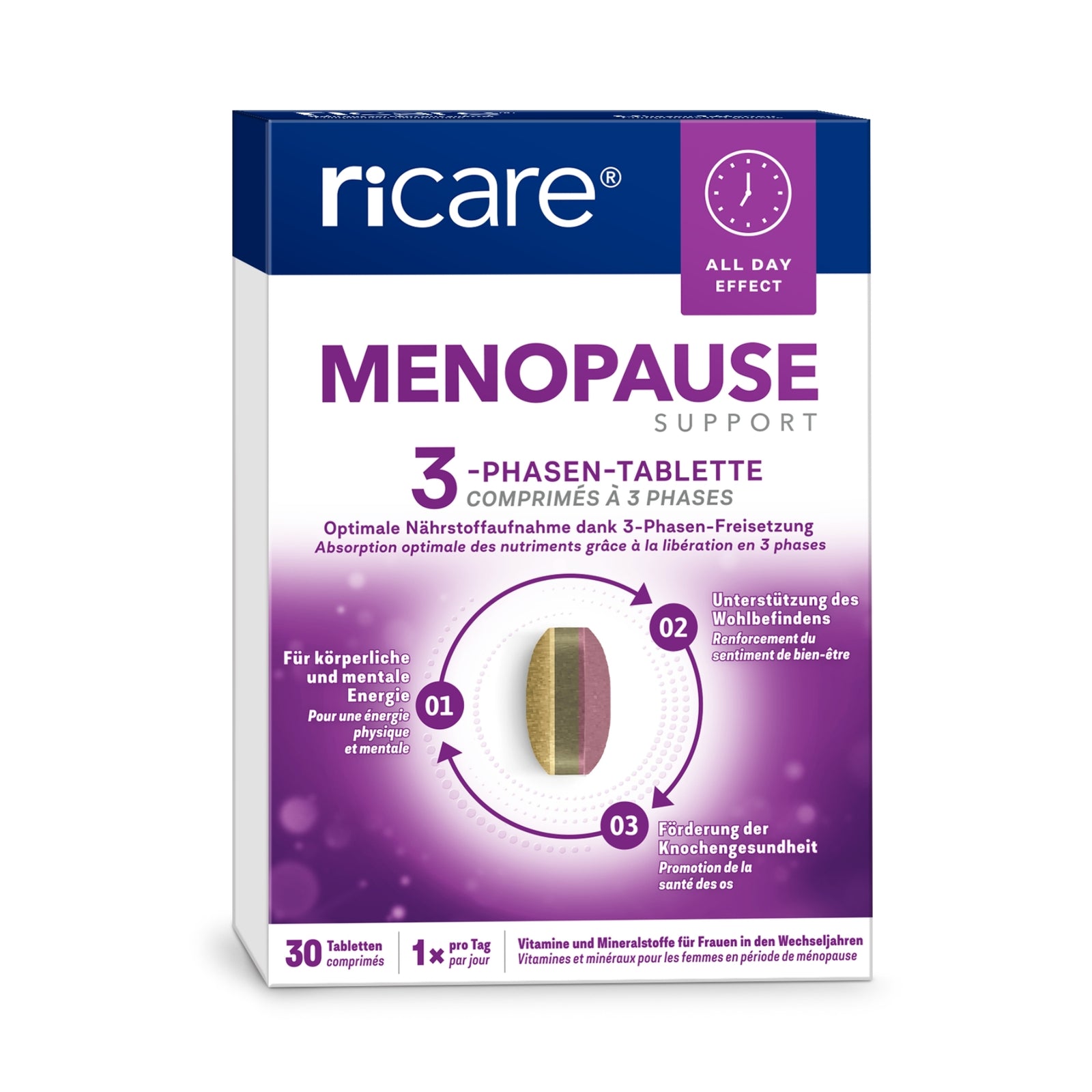
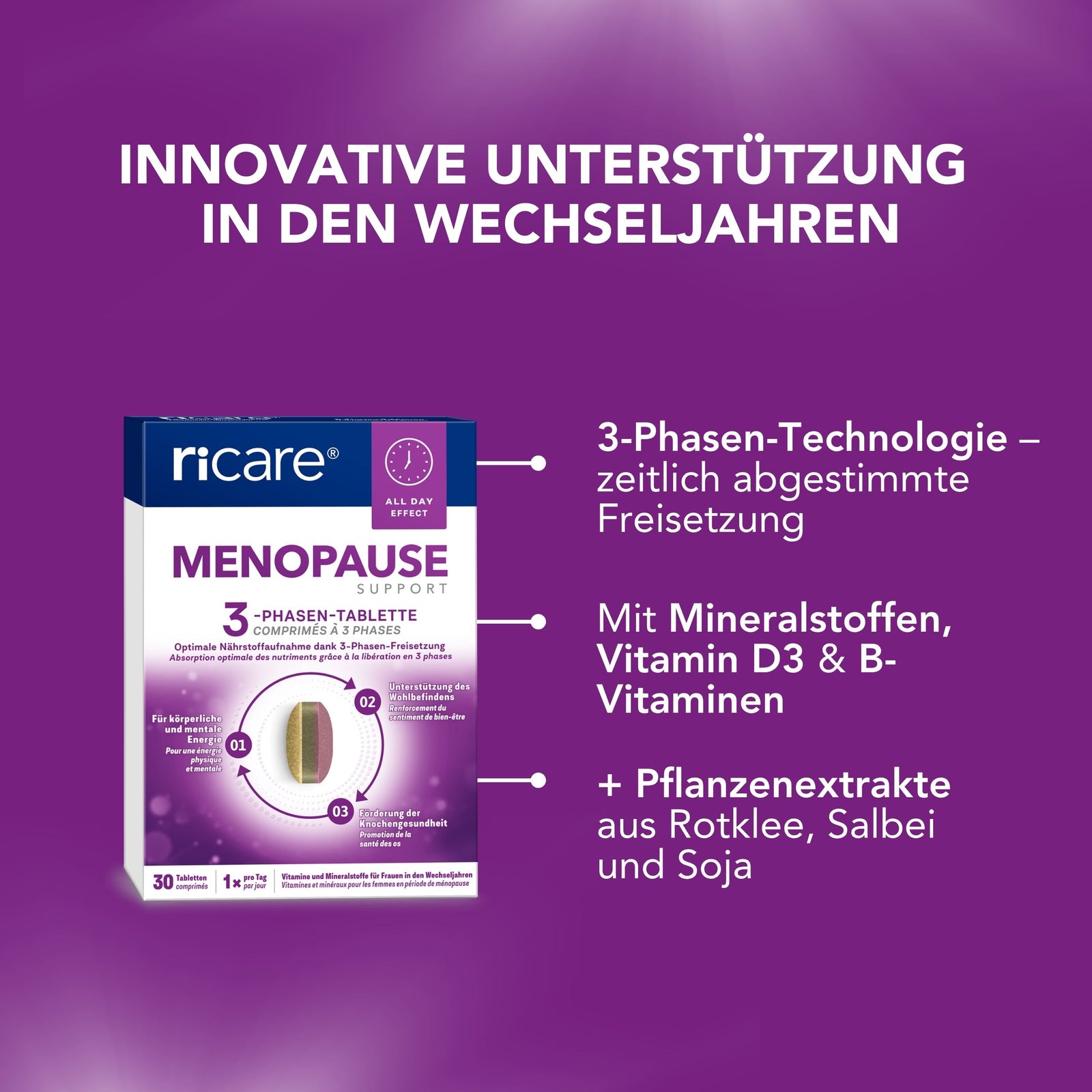
Discover ricare® Menopause Support —the innovative 3-phase tablet that supports you through menopause with targeted nutrient supply and promotes your well-being.
Learn more